You make money on Instagram in two ways: Instagram pays you (Gifts, Subscriptions, bonuses) or your audience pays you or a brand (brand deals, affiliate links, your own products and services). For almost everyone, the second way pays far more. Instagram's own payouts are real but small, and most come with follower thresholds.
This guide lists ten ways with the requirements for each, what each realistically suits, and the part most guides skip: how to move a follower from "I like this" to "I bought this", which almost always happens in your link in bio or your DMs.
Key takeaways
- You don't need a big following to earn. Selling your own product, service or affiliate links needs no follower minimum. Instagram's native tools do.
- Instagram's native tools need a professional account in an eligible country, and usually a follower minimum. Check your Professional dashboard → Monetization status for what you qualify for.
- Brand deals pay most per post for creators, but they depend on engagement and a clear niche, not just follower count.
- Most sales happen off the post: through one link in your bio or one DM. Make both work before you chase more followers.
The ten ways at a glance
Six of the ten need no followers at all: selling your own products, selling services and bookings, digital products, affiliate links through external programs, UGC work, and your own course or community. Customers, clients or brands pay you directly, so what matters is the offer, not the follower count. Shops and makers usually start with products. Coaches, salons and freelancers start with bookings, and educators with digital products or a course.
Brand deals have no hard rule either, but brands look closely at engagement and a clear niche before they pay.
Instagram's own tools come with thresholds. Third-party guides commonly quote about 1,000 followers for Creator Marketplace (on a public professional account, 18+), about 10,000 for Subscriptions, and about 500 for Gifts on Reels (some older sources say 5,000). These numbers change over time, and Instagram shows your actual eligibility in the Professional dashboard.
1. Sell your own products
The most direct route: post what you make, then make it easy to buy. You can tag products if you have an Instagram shop, but in 2026 most sales go to your website, your WhatsApp or your DMs. Read how to sell on Instagram for shops, product tags and what changed with checkout.
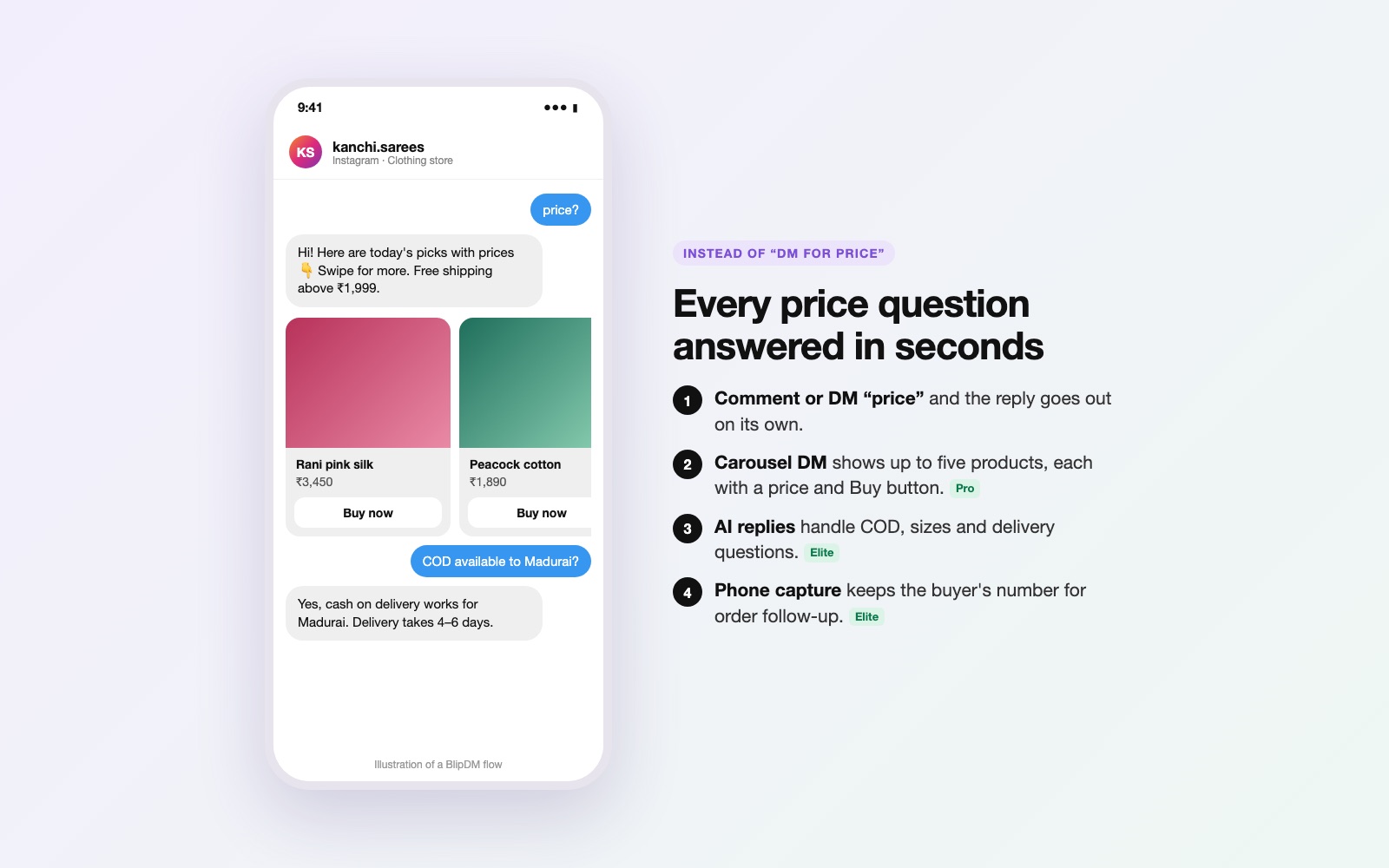
What makes it work: a clear "comment a word to get the link" on every product post, so you answer buyers in seconds instead of hours. See send carousel product DMs from a comment.
2. Sell services and bookings
Salons, coaches, photographers, tutors and local businesses earn from bookings, not product sales. Instagram is the shop window. The money comes when someone books.
- Put "Book a slot ↓" in your bio, with the booking link first.
- End Reels with "Comment BOOK for my calendar", and send the link by DM.
- Show proof: before-and-after posts, client results, reviews in Highlights.
3. Digital products
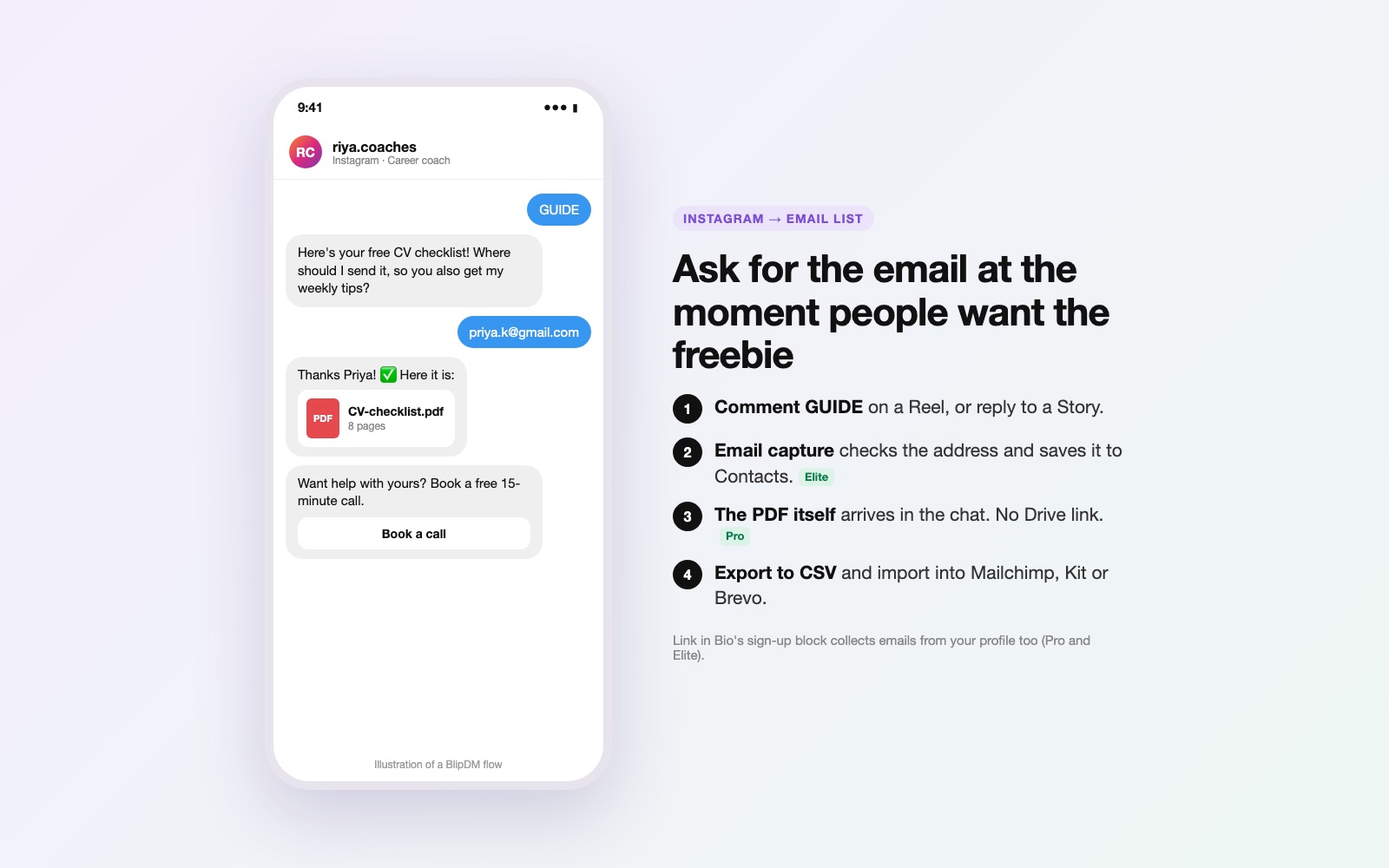
Templates, presets, guides, courses, recipe ebooks, workout plans. You make them once and sell them many times, with no shipping. A common route is a free sample (a guide sent by DM when someone comments a keyword) leading to the paid version.
4. Affiliate links
You earn a commission when someone buys through your link. Programs include Amazon Associates (Amazon Influencer in India and the US), brand programs, and networks such as Impact or CJ in the US and UK. Instagram has also brought back its own affiliate tagging in some markets, reportedly for accounts with 1,000+ followers.
- Disclose it. Use "#ad" or "affiliate link". The ASCI in India, the FTC in the US and the ASA/CMA in the UK all expect it.
- Instagram captions don't make links clickable, so put affiliate links in your bio, a link-in-bio page or DMs. See how to share affiliate links in Instagram DMs.
5. Brand deals and sponsored posts
Brands pay creators to feature their product. Rates vary widely by niche, country and engagement. A small creator with a focused, engaged audience often lands deals ahead of a bigger, general account.
How to get them:
- Pick a niche a brand can buy into, like "budget travel in India" or "skincare for oily skin".
- Keep a short media kit: audience, top posts, past work, contact.
- Pitch brands you already use. It's easier for both sides.
- Use Instagram's branded content tools: the Paid partnership label is required when you're paid or gifted.
6. Instagram Creator Marketplace
Creator Marketplace is Instagram's own place where brands find creators for paid partnerships. Guides commonly say you need a public professional account, to be 18 or older, an eligible country and about 1,000 followers. If you qualify, it shows under Professional dashboard → Partnership ads and branded content (labels vary). Keep your profile, niche and contact details current so brands can find you.
7. Instagram Subscriptions
Followers pay a monthly fee for subscriber-only Stories, posts, Reels, Lives and broadcast channels. Third-party guides commonly quote a 10,000-follower minimum, and creators choose from a range of monthly prices. It suits creators whose fans want more of them, like educators, fitness coaches and comedians. Pair it with a subscriber-only broadcast channel to give subscribers something they use every week.
8. Gifts on Reels
Viewers buy Stars and send them as Gifts on your Reels. Instagram pays out once you reach a minimum balance. Most guides quote a 500-follower threshold, some older ones 5,000. Treat Gifts as a bonus, not an income plan: payouts are per Star and small unless a Reel goes very wide.
9. Paid collaborations and UGC
User-generated content (UGC) creators make videos and photos that brands post on their own accounts or use in ads. You don't need a large following, just good content. Brands find UGC creators through Instagram, marketplaces and cold pitches. A portfolio Highlight of your best work helps.
10. Your own community, course or membership
Experts and coaches often earn most from a paid course, cohort or membership outside Instagram, using Instagram to build trust. Free value on Instagram, a free sample by DM, then a paid offer: that's the path most successful education accounts follow.
Turn followers into buyers: the step most guides skip
Every way above ends with someone clicking a link or sending a message. Two things decide whether that happens.
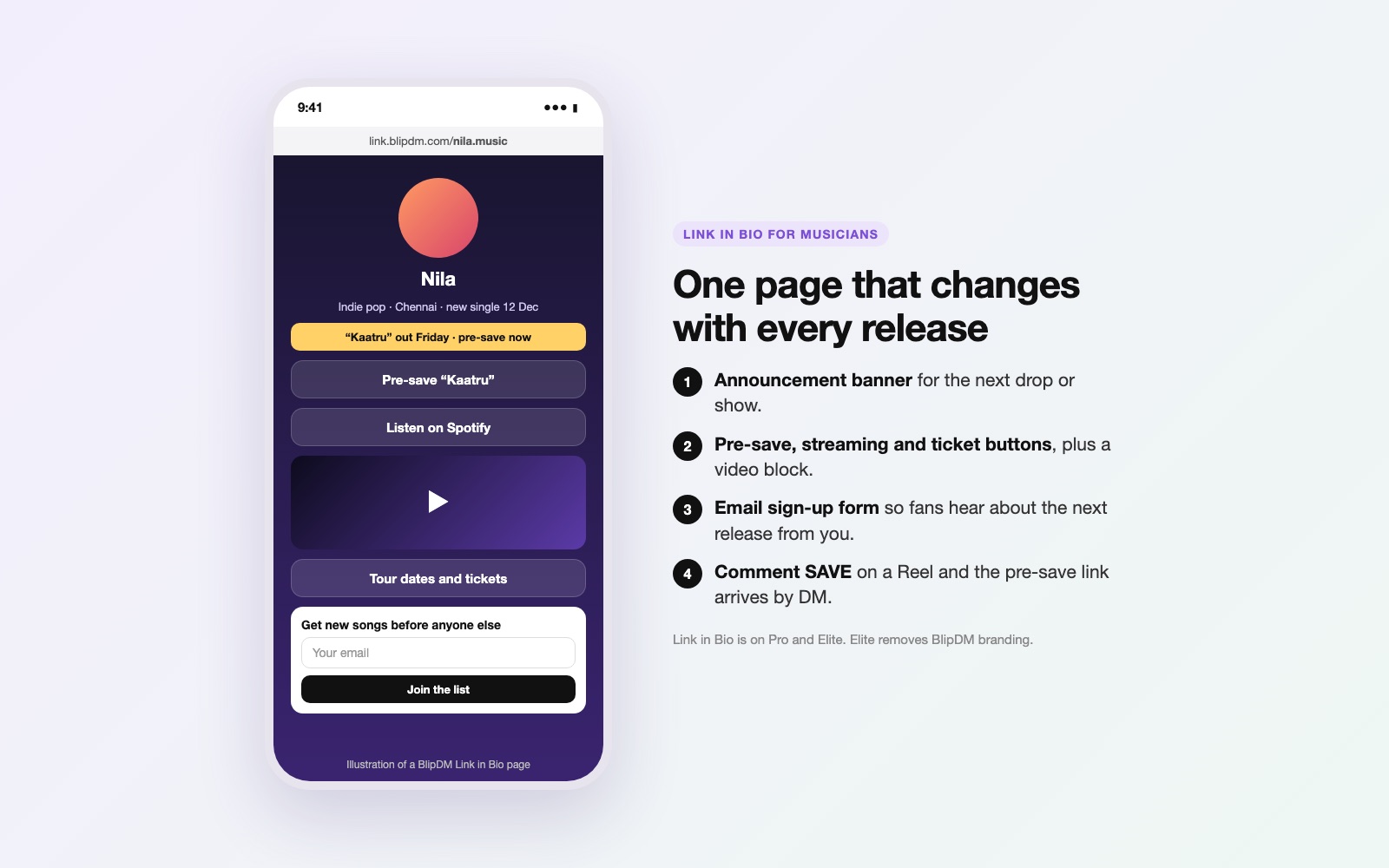
1. One link in your bio that does one job
Visitors give your profile a few seconds. Lead your bio with what you do and one call to action, and make the first link deliver exactly that. Get ideas from 69 Instagram bio ideas, with a free bio generator.
2. Fast replies in your DMs
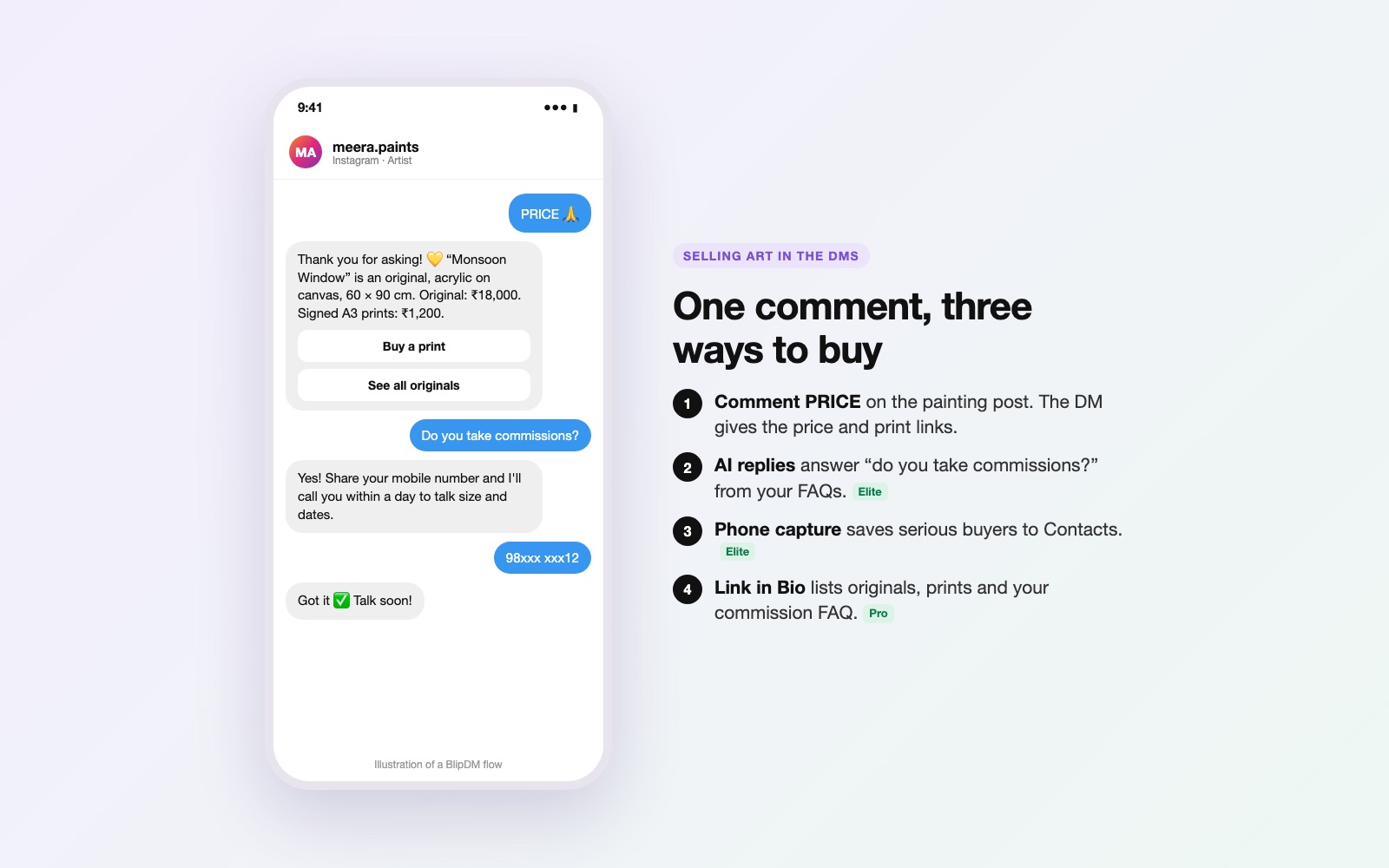
The moment someone comments "price?" or replies to your Story, they're interested. An hour later, they've scrolled on. That's what comment-to-DM automation is for: every person who comments your keyword gets the link, code or price in their DMs within seconds, on Meta's official API.
Without automation, "link in bio!" sends the follower off to look for it, "price?" gets an answer hours later, and most interested people never hear from you again. With automation, the link arrives in their DMs, they get the price in seconds, and each one is saved as a contact you can talk to again.
BlipDM's Free plan covers 500 DMs a month, Pro covers 50,000 for $3 (₹99) and Elite is unlimited for $6 (₹499). See the complete guide to Instagram DM automation.
What to avoid
- Buying followers or engagement. It lowers your engagement rate, which brands check, and breaks Instagram's rules.
- Undisclosed ads. Regulators in India, the US and the UK fine or name accounts that don't label paid content.
- Reposting other people's content. Since April 2026, Instagram stops recommending accounts that mostly repost others' content.
- "Make money on Instagram" apps that ask for your login or promise payment per like. Instagram doesn't pay for likes.
Frequently asked questions
How many followers do you need to make money on Instagram?
None, if you sell your own products, services or affiliate links. Instagram's own tools have minimums. Commonly quoted figures are about 500 for Gifts, about 1,000 for Creator Marketplace and affiliate tags, and about 10,000 for Subscriptions. Check your Professional dashboard for your actual eligibility.
Does Instagram pay you for views?
Not directly for most accounts. Instagram's bonus programs have come and gone, and Gifts pay per Star that viewers send. Most creators earn more from brand deals, affiliate links and selling their own products than from Instagram payouts.
How much do Instagram influencers earn per post?
It varies widely by niche, country, engagement and the work involved (one Story vs a Reel with usage rights). A small creator with high engagement in a buying niche (beauty, tech, finance) can out-earn a larger general account.
How do I start making money on Instagram as a beginner?
Pick a niche, post consistently, and make one simple offer from day one, such as an affiliate link, a service or a small digital product. Put it in your bio and send it by DM to people who comment. Brand deals become easier once you can show engagement and sales.
Can I make money on Instagram in India?
Yes. Selling products and services (often through WhatsApp or DMs), affiliate programs such as Amazon's, brand deals and Gifts are all available in India. Check Instagram's eligibility for Subscriptions and Creator Marketplace in your Professional dashboard, since availability varies by country.
Is it worth buying followers to make money faster?
No. Bought followers don't buy anything, they lower your engagement rate, and brands check engagement before paying you. It also breaks Instagram's terms.